Economic data today: What history says on women and AI job risk
Labor figures from past technology shifts, from telephone switches to the PC, show why economists see women's jobs as more exposed to AI. The numbers.
| Data point | Figure |
|---|---|
| Women in high-income countries working in occupations at highest AI risk (ILO, March 2026) | Nearly 1 in 10 |
| Share of secretaries and clerical workers who are women | 90% |
| Telephone operators who were female, 1940s | Nearly 95% |
| Operator jobs that vanished after automated switches | About 75,000 (estimate) |
| Women’s labor force participation, 1950 to 1980 | 34% to 52% |
| Secretaries, stenographers and typists, 1980 census | 4.7 million, over 98% women |
Sources: CNBC reporting on research from the International Labour Organization, Institute for Women’s Policy Research and academic studies.
Economic data today: a labor-market record worth rereading
The debate over artificial intelligence and employment has mostly relied on forecasts. A CNBC report published Monday instead looks backward, collecting labor statistics from earlier waves of automation and asking what they imply for women now. Its conclusion is that clerical and administrative work, where women are heavily represented, is the type of work AI is aimed at.
Ariane Hegewisch, a senior research fellow at the Institute for Women’s Policy Research, said AI focuses on routine tasks and pattern-finding, which describes much clerical work. She noted that 90% of secretaries and clerical workers are still women. The International Labour Organization concluded in March that nearly 1 in 10 women in high-income countries work in the occupations at highest risk from AI.
The telephone operator precedent
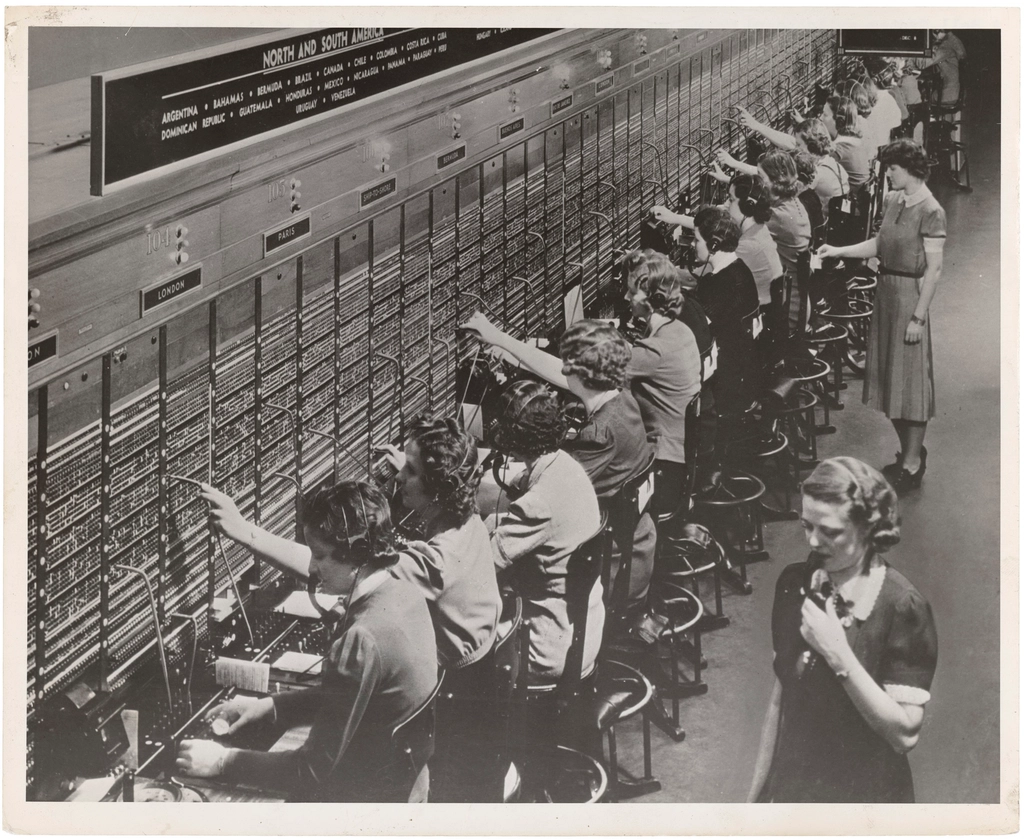
In the 1940s nearly 95% of America’s telephone operators were female, and the job was relatively well paid. When AT&T rolled out the automated telephone switch, an estimated 75,000 operator jobs disappeared in the decades afterward.
Economists James Feigenbaum of Boston University and Daniel Gross of Duke University studied census and paycheck data along the path of AT&T’s rollout. Their 2020 paper found that incumbent operators lost jobs and careers, and many ended up in lower-paying work or left the workforce. Economist David Autor said the pattern reflects how people choose careers early and stay in them, so a worker displaced from a top occupation usually moves down.
The same research found the next generation fared better. Younger women found comparable work elsewhere, and the economists wrote that anxiety about future generations’ opportunities proved “somewhat misplaced.”
Appliances, offices and the PC
Between 1950 and 1980 the number of employed U.S. women grew by more than 25 million, and the participation rate rose to 52% from 34%. Over the same period 16 million more men found work, though the male participation rate fell by 5 percentage points. CNBC attributes part of the shift to household appliances, which reduced unpaid housework, and to demand for office and clerical staff that was open to workers with a high school education.
The 1980 census counted nearly 4.7 million secretaries, stenographers and typists, more than 98% of them women. IBM’s personal computer arrived in 1981, followed by Microsoft Word two years later, and some of that work moved to other employees. Studies cited in the report show women were already more likely than men to use computers at work, and many adapted.
A 2022 paper by Marcus Dillender and Eliza Forsythe found that adopting software for office and administrative work was associated with a 1% decline in employment in the sector and a 3% rise in wages for college graduates.
What the figures do and do not show
The history does not forecast AI’s effect. It shows that displacement hit workers in the affected occupation hardest and that new generations often found equivalent work. The report also notes that more women now hold college degrees and managerial roles than in earlier waves, which may offer some protection, though AI is expected to move up the value chain of human jobs.
None of the figures above measure an AI effect today. Occupation-level employment and wage series, tracked over several quarters, are what would test whether the clerical pattern repeats.
Prepared with AI assistance from public sources and reviewed under our editorial policy. Not investment advice.